Below is a general overview of the home buying process. While many of these steps overlap and occur simultaneously without a rigid chronological order, this breakdown illustrates the typical flow of the transaction.
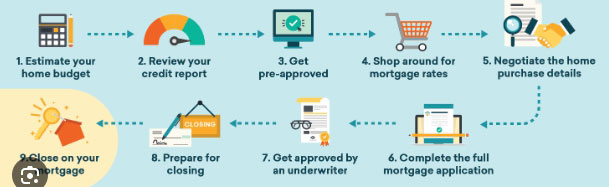
Home Buying Process
House Hunding
The first step is to find the home you want. In the past, the seller typically covered all real estate agent fees for both sides. However, due to recent rule changes, the buyer and the buyer’s agent must now negotiate compensation directly. This means the buyer and seller decide—through negotiation—who will cover the buyer’s agent fee and how much.
Even so, when purchasing a home worth hundreds of thousands of dollars, searching entirely on your own has clear limitations. Even if you end up paying part of the fee yourself, it is still highly recommended to work with a real estate agent so you can find suitable homes quickly and efficiently.
Fortunately, in many cases, sellers are still covering the buyer’s agent fee, depending on the situation and negotiation.
Contacting a Mortgage Officer
It is recommended to meet with a mortgage officer either while hunting for a home or even before you begin. Even without providing specific personal details, you can share basic information about your situation to get a rough estimate of how much loan you can qualify for and at what interest rate.
Once you have a budget plan in place, then start looking for a home. As soon as you find a house you like, contact your mortgage officer immediately to request a loan PREAPPROVAL LETTER. You will present this to the seller, and once the seller accepts it, the contract becomes effective.
When making an offer to buy a house, this preapproval letter is absolutely required—unless, of course, you are buying with cash.
Attorney Review
Once the seller accepts the buyer’s offer, it becomes a contract. Then, the seller’s attorney drafts the contract. They will send it to the buyer’s attorney, who will conduct a legal review to ensure there are no issues with the documents and that the buyer’s intentions are properly reflected. Once this Attorney Review is completed and passed, the contract becomes fully binding.
However, in states like Florida—where an attorney is not required—most of the transaction is handled directly between the real estate agent and the title company.
The first step after this is usually delivering the earnest money deposit (typically around 10% of the purchase price) within about a week. Your realtor will handle and facilitate this process. Usually, a title company working alongside the buyer’s attorney will hold these funds in escrow and distribute them as needed later. In any case, once the money is paid, backing out of the contract can cause serious complications, so please consider it carefully.
Inspection
Once the contract is fully executed, the first thing you must do is the home inspection. Of course, this usually happens after you pay the 10% earnest money deposit. In fact, the contract is only considered truly solidified once this deposit is received, after which you cannot simply cancel the contract at any time without facing financial losses.
However, one of the conditions that allows for cancellation is the INSPECTION. There are three main conditions under which you can legally cancel the purchase contract without losing your money. These are called Contingencies. If an issue arises under the Inspection, Mortgage, or Appraisal contingencies, you can cancel the contract and get your deposit refunded.
In any case, the most crucial and fundamental step is the inspection—essentially, thoroughly examining the house. Are there defects in the home? If so, what will be done about them? Based on this, you will negotiate with the seller to reach a final agreement. Crucially, the contract can be canceled normally only if there are structural issues with the house and the seller refuses to agree on a resolution. Otherwise, unilaterally canceling the contract over minor, minor issues will result in financial loss.
Furthermore, even if the cancellation is mutual, you may still lose the time and effort invested in between, or, depending on the circumstances, you might end up in a lawsuit and fail to recover the deposit you already paid.
Toward Closing
Once the contract is in place, the mortgage process begins simultaneously. This is why you need to submit various documents. At the same time, your attorney takes action and coordinates with the TITLE COMPANY. Their job is to verify if there are any title issues with the house—meaning they check for liens, or any other legal or documentary problems.
The loan company will also conduct a home APPRAISAL. Depending on the appraisal results, issues may arise with your loan approval. Furthermore, any issues stemming from the mortgage can be a legal ground for canceling the contract. In other words, if your mortgage is denied, a legal cancellation is permitted. In any case, after the contract is signed, the mortgage lender, attorney, title company, and appraisal company review the property from multiple angles. Once everything is cleared with no issues, you proceed to closing.
Even if there are no issues with the individual applying for the loan, in the case of a condo, the loan may be denied due to issues with the condo association itself. Such problems often arise during the process of checking the condo’s tenant ratio, structural issues, and other internal factors.
Closing
The final stage is called closing. Literally, it means wrapping up the home-buying process.
As mentioned earlier, various professionals go through the process of verifying the property, and naturally, all of these services cost money. This is where Closing Costs come into play. In other words, it refers to the final amount of money you must bring when you sign the final paperwork to buy the home.
Usually, you will be contacted by the title company or your attorney regarding the exact amount of the closing costs. Once notified, you must visit your bank the day before closing to get a Certified Check for that amount to bring with you, or you can bank-wire the funds to the account specified by the title company. Once they verify the funds and you sign the documents, the title company sends all the paperwork to the lender. The lender reviews it, funds the loan by sending it to the title company, and the title company distributes those funds to the respective parties, completing the deal.
Closing costs include the remainder of your down payment (minus the earnest money deposit you already paid), as well as service fees and commissions for the loan company, attorney, title company, and appraisal. You will also pay for items like property taxes, homeowners insurance, and many other line items. Excluding the down payment, these costs typically range from a few thousand dollars to significantly more. At this final closing, you will receive the house keys from the seller.
Of course, you should do one final walk-through of the property about a day before closing, and then you can move in on your desired date. Generally, the entire process from the initial contract to closing is expected to take about two months.
When Things Get Complicated…
Occasionally, some loan officers may quote a competitive rate initially, only to intentionally hike up the rate during the final lock-in process.
Remember, you retain the right to change your lender up until the very final moments of the transaction.
While switching lenders late in the process may incur minor administrative fees and cause slight delays, securing a lower long-term interest rate invariably yields greater financial savings over time.
If you find yourself in this situation, reach out to us. We can resolve your file and close the loan in as little as 10 days.