One of the most fundamental concepts in mortgage lending is the difference between Full Doc (Full Documentation) and No Doc or Alt Doc (No Documentation or Alternative Documentation). Here, doc refers to documents — specifically, the official documents used to verify income. Let me break it down in a simple and clear way.
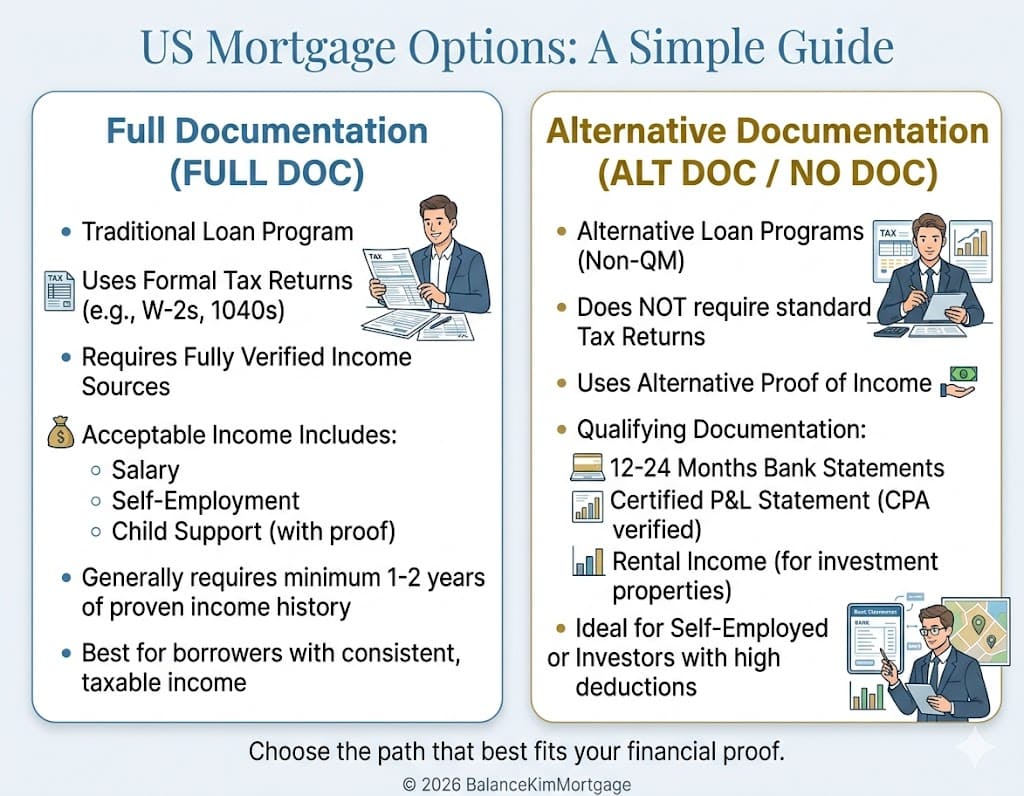
FULL DOC — Full Documentation
Full Doc is the traditional, standard method of qualifying for a mortgage using fully verified income documents, such as tax returns.
Not only W‑2 wages or self‑employment income, but also legally documented income such as alimony, child support, or any other source that is transparent, verifiable, and expected to continue can be counted as qualifying income.
However, most types of income must have been received consistently for at least 1–2 years to be included in the calculation. If you recently started receiving the income and it has not yet appeared on your tax return, it may be difficult to use.
That said, even if it has been less than a year, the income may be accepted if:
- there is a court order or a clear written agreement,
- the payments are being deposited regularly into your bank account, and
- the documentation clearly states that the income will continue for at least three years.
ALT DOC — Alt Documentation
What many people call “Alt Doc” simply means that the lender will not review your tax returns. Instead of tax documents, the borrower proves repayment ability through alternative forms of documentation. In the actual mortgage industry, this is more accurately referred to as Alternative Documentation or Non‑QM lending.
This program is commonly used by self‑employed borrowers or investors whose tax returns show low net income due to deductions. Instead of tax returns, they verify income using:
- Bank statements
- CPA‑prepared Profit & Loss statements (P&L)
- Rental income from investment properties, and more.
You can review more details about No Doc programs here.